
Telecommunications infrastructure is built to a rollout schedule that the
commercial team has already sold to the market, a spectrum licence that carries
coverage obligations with regulatory deadlines, and a capital allocation that
the board approved on the assumption that the cost-per-site figures in the
business case were achievable. The gap between those three numbers and
what actually happens in the field, the civil contractor who discovers
rock where the geotechnical report promised soil, the power utility
that misses the grid connection date by six weeks, the tower landlord
whose lease negotiation drags three months past the acquisition
target, is the gap where network rollout programmes most
reliably fall apart, and where capital budgets most silently erode.
QBaticEPM3 gives mobile network operators, tower companies, fibre
infrastructure providers, data centre developers, and the civil,
electrical, and specialist contractors that build and maintain
their networks a single structured platform to manage the full
infrastructure lifecycle, from the detailed site cost model
that supports the rollout business case, through the
multi-site construction programme that must hit coverage
milestones on time and on cost, to the operations and
maintenance regime that keeps every tower, every
fibre route, every data centre hall, and every
point-of-presence node performing to the
uptime and availability standards
that service agreements demand.
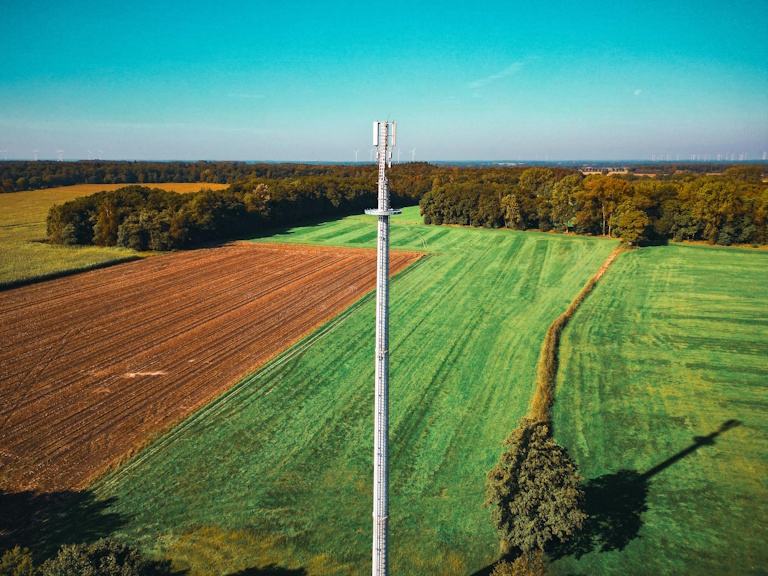
From the site acquisition cost model that anchors the rollout business case through to a corrective maintenance work order raised against a specific tower's rectifier bank in year eight of operation, every cost, every asset, and every compliance record connected in one environment that never loses what it has learned.
Request a DemoRollout Costing & Site Estimation
Per-site and programme-level cost models for towers, fibre routes, data centres, and PoP nodes, structured for business case approval, capex tracking, and contractor award across large rollout portfolios.
Multi-Site Construction & Rollout Management
Parallel construction programme management across hundreds of concurrent sites, civil works, tower erection, equiEPMnt installation, grid connection, and commissioning tracked to coverage milestone dates.
Network Operations & Asset Maintenance
Preventive and corrective maintenance across the full network asset base, towers, power systems, fibre routes, data centre infrastructure, and passive equiEPMnt, managed to SLA uptime commitments.
Rollout Cost. Construction Programme.
Network Uptime.
Three integrated capabilities built for the realities of telecommunications infrastructure, where capital is allocated per-site across large portfolios, construction must hit regulatory coverage deadlines, and network uptime is a contractual obligation measured in nines.
Per-Site & Portfolio Cost Modelling
Build the full rollout cost model from a telecoms-specific component library, greenfield tower foundations by soil type and tower height, rooftop and building-mounted installation civils, equiEPMnt shelter and cabinet supply and installation, antenna and feeder systems, power supply and battery backup configuration, grid connection civil and electrical works, fibre route construction including micro-trenching, horizontal directional drilling, duct installation and cable blowing, data centre civil shell and core, mechanical and electrical fitout, and connectivity infrastructure. Costs are built at individual site or route level and aggregated to programme level, so the capex tracker, the business case model, and the contractor package pricing all draw from the same structured dataset without duplication or reconciliation risk.
Multi-Site Rollout Programme Control
A network rollout programme is not one project. It is hundreds of concurrent site programmes each with their own civil contractor, grid application, equiEPMnt delivery lead time, and commissioning sequence, all converging on a coverage milestone date that the regulator is watching and the commercial team has sold. QBaticEPM3 manages every site in parallel, tracking civil status, equiEPMnt delivery, installation progress, grid connection, and commissioning sign-off against the baseline schedule. The rollout programme manager sees in real time which sites are on track, which are at risk, and where the delay is, whether it is a contractor resource issue, a grid utility delay, a landlord access problem, or a planning permit that has not moved, before the coverage milestone date arrives and the shortfall becomes a regulatory non-compliance.
Network Asset Maintenance to SLA Standard
A telecommunications network is only as reliable as the infrastructure supporting it, and infrastructure reliability is only as good as the maintenance programme keeping it operational. Tower structural integrity, power system health, battery state of charge, fibre route condition, and data centre mechanical and electrical availability all require structured preventive maintenance programmes executed to defined intervals and documented to the standard that tower landlord agreements, spectrum licence conditions, and network sharing agreements require. QBaticEPM3 manages the full maintenance programme across every asset class from the same register that was built during construction, so the asset history starts at commissioning and never has a gap.
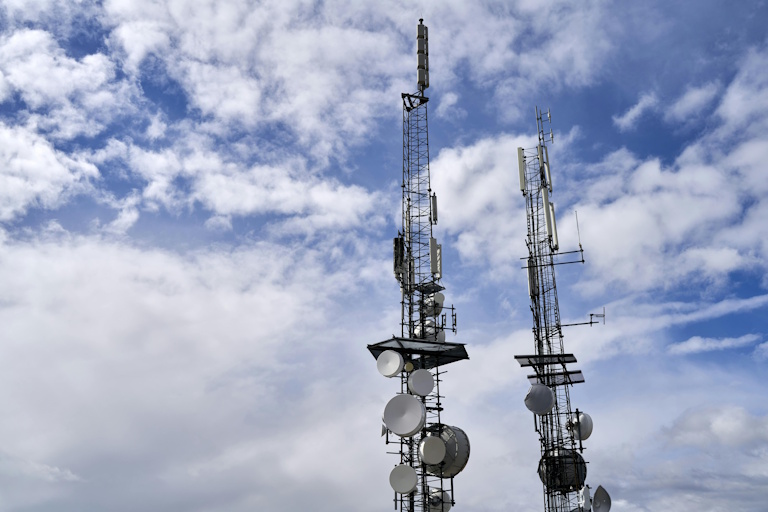 Tower & Mast Construction
 Fibre Route & Ducting
 Data Centre & PoP Infrastructure
Every Site Commissioned. Every Asset Maintained. Every Uptime Commitment Honoured.
-
01
Network Asset Register Built Site by Site During Rollout
As each site is commissioned, tower structure, equiEPMnt shelter, power system, battery bank, antenna array, feeder cables, grounding system, and access control, every component is registered in QBaticEPM3 against the site identifier with its asset tag, specification, supplier, installation date, and commissioning test result. Fibre routes are registered by span, duct section, and splice point. Data centre halls are registered by rack row, cooling zone, and power distribution unit. The network operations team inherits a complete, current asset register as each site goes live, not a configuration management database that someone will populate correctly when they get a quiet week, which never arrives. The maintenance programme, the spares strategy, and the SLA reporting all build from this register from day one.
-
02
Tower Structural, Power & Antenna System Maintenance
Telecommunications towers are passive structures that are frequently assumed to require no active management, until a structural inspection reveals corrosion progression in the base section, or a grounding system check identifies inadequate earth resistance that exposes equiEPMnt to lightning damage risk. QBaticEPM3 manages the full tower maintenance programme, periodic structural inspections with corrosion and connection assessment, antenna alignment verification, feeder cable weathering inspection, grounding and bonding continuity tests, and access equiEPMnt safety checks, against each tower's asset record. Power system preventive maintenance covers rectifier health, battery capacity tests, generator service intervals, automatic changeover testing, and fuel level monitoring, with every result recorded against the specific site and triggering corrective action when any parameter approaches the threshold that predicts an outage.
-
03
Fibre Network Condition & Fault Management
Fibre optic infrastructure fails at the margins, at splice joints exposed to moisture ingress, at duct sections where ground settlement has applied lateral stress, at cable crossings where third-party civil works have caused inadvertent damage, and at patch panels in exchange buildings where insertion loss is incrementally degrading link budgets. QBaticEPM3 manages the fibre network inspection and test programme, optical time domain reflectometer test schedules by route section, splice loss measurement campaigns, duct integrity inspections, and end-to-end link budget verification, against the route asset register built during construction. When a fault is detected, the corrective work order is raised against the specific span and splice point with the full route history attached, so the field technician arrives with the correct section length, the splice record, and the original installation specification, not just a grid reference.
-
04
Data Centre Mechanical & Electrical Infrastructure Maintenance
Data centre uptime is measured in Tier classifications and expressed in percentages that translate directly into minutes of annual downtime that the facility's SLA permits. Achieving Tier III or Tier IV availability requires not just redundant systems but a preventive maintenance programme that keeps every UPS module, every precision air conditioning unit, every cooling tower, every generator, every automatic transfer switch, and every busbar tap-off unit performing to its design specification, simultaneously, continuously, and with a documented maintenance history that the independent assessor can audit. QBaticEPM3 manages the full data centre M&E maintenance programme, UPS battery capacity testing and replacement cycles, precision cooling service schedules, generator load bank testing intervals, busway and PDU thermal imaging campaigns, and raised floor integrity inspections, against the specific asset tags, with every result and every remedial action part of the permanent equiEPMnt record.
-
05
Regulatory Compliance, Licence Obligations & Landlord Reporting
Telecommunications infrastructure operates within a web of ongoing obligations, spectrum licence coverage requirements that must be demonstrated to the regulator, tower landlord agreements that require annual structural inspection certificates and equiEPMnt change notifications, electromagnetic field compliance assessments at sites near schools or hospitals, and network sharing agreement reporting to tower co-location partners. QBaticEPM3 structures the compliance calendar against every regulatory and contractual obligation, scheduling the required assessments, capturing the results, generating the reports, and maintaining the evidence base that demonstrates continuous compliance rather than point-in-time certification. When the regulator requests coverage data, the tower landlord requests the annual inspection certificate, or the network sharing partner requests uptime records, the information is available immediately from the structured operational record, not assembled under pressure from disparate sources.

Network intelligence, from first foundation pour to final decommission
Rollouts That Hit Their Dates. Networks That Stay Online.
Telecommunications infrastructure investment is justified on subscriber revenue projections that depend on network availability, coverage quality, and the speed at which the rollout programme extends the serviceable footprint. Every site that slips behind the programme schedule is a coverage commitment unfulfilled, a revenue opportunity deferred, and a regulatory milestone at risk. Every unplanned tower outage is a service degradation that subscribers experience and churn analysis records. The infrastructure programme and the maintenance programme are not separate disciplines, they are the same financial obligation viewed at different points in time.
QBaticEPM3 connects both disciplines in one environment. Programme managers see the live rollout status across every site in the portfolio. Operations teams manage the maintenance programme from the asset register built during construction. Finance teams track capex deployment per site and opex per asset against the model that justified the investment. And when the regulator asks for coverage evidence, the landlord requests an inspection certificate, or the board wants to know the cost per site versus the original estimate, the answer is a report generated from data that has been building itself from the first day of construction.
See the Platform in Action
Networks That Roll Out on Time.
Infrastructure That Stays Connected.
Ready to manage every site, every route,
and every node from one platform?
Let QBaticEPM3 connect your rollout cost models, your multi-site construction programme, and your network maintenance regime, so every tower, every fibre span, and every data centre hall is governed from a single, complete record that keeps your network online and your obligations met.